
Sema Fonkem 17/10/2025
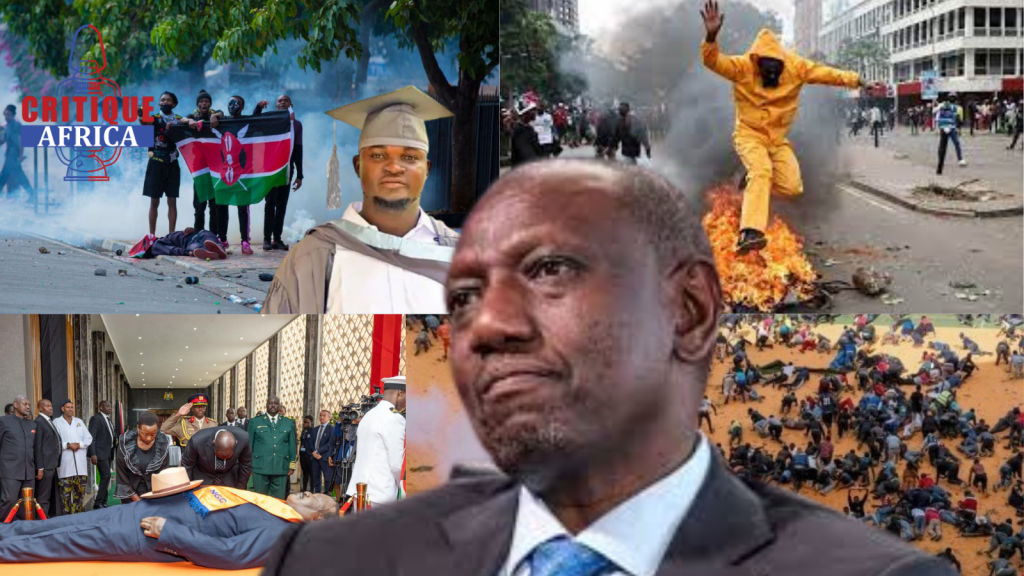
Memories from the beautiful landscapes, the Massai Mara National Reserve and amazing touristic destinations in Kenya are rapidly fading from the minds of many. This is so because recently, Kenya under His Excellency president William Ruto’s rule has been faced with many challenges and the biggest of them being the unscrupulous behavior of men in uniform who are under oath to protect and serve the nation.
As an outsider and someone who is highly interested in African tourism and political events, Kenya became one of my favourite travel destinations from the time Kenyan athletes won a total of 13 medals: 6 gold, 6 silver and 1 bronze during 2016 Rio Olympics. Africa cheered and it remains the highest record of African performance in an Olympic.
The Olympic achievement amongst other events slowly erased the painful thoughts from the Westgate Mall tragic attack, which occurred in Nairobi on September 21, 2013. The incident involved a mass murder perpetrated by four members of the militant group al-Shabaab, affiliated with al-Qaeda. At least 67 people were reported dead and 175 others injured.
Just before the 2016 Olympics, Adan Garar, the Al-Shabaab member who allegedly masterminded the Westgate Mall attack was reported killed following a drone strike on March 12, 2015. It is was a celebration around Africa to know that his victims had gotten somewhat justice.
Time went on and Uhuru Kenyatta who served as fourth president of Kenya from 2013 to 2022 did his best to run the affairs of the country facing high living costs, rising public debt, serious allegations of corruption and popular with its public high wage bill strategy to ease the strain on public funds.
In September 2022, William Kipchirchir Samoei Arap Ruto born December 21 1966 who previously served as Minister of Agriculture, Minister of Home Affairs and Minister of Higher Education became Kenya’s fifth president.
After defeating late Raila Odinga by receiving 50.49% votes during the August 9 2022 presidential election, Ruto would be seen as a charismatic and promising leader to finally end corruption in Kenya.
Au contraire, Mr. Ruto’s administration has not only been accused of wrong doings, it has seen the most active Gen Z protest and death of citizens who have asked for nothing but the positive change he promised Kenyans during his inauguration with the remarkable “I want to thank God because a village boy has become the president of Kenya,” line he used.
The Gen Z Protest
President William Ruto promised he was going to serve Kenyans by working hard for everyone. He said was going to cut down food and fertilizer prices, improve access to credit and loan for small and medium businesses.
One of the early red flags: Ruto’s oppression of the press by limiting the access of local television stations to the inauguration and handing exclusive broadcast rights for the ceremony to a local affiliate of a South African pay-TV company could not go unnoticed. But however, as Kenyans who believe in the philosophy of Ubuntu which encourages that defaulters are given a second chance and assisted to become better decided to trust incumbent president Ruto. An opportunity Mr. Ruto will strangely misuse.
From nowhere, president Ruto who was suppose to end corruption and reduce living cost in Kenya began a spree of tax reforms that will leave Kenyans extremely frustrated with the village boy they thought they knew.
Unable to continue carrying the burden of waiting for positive change from government, the ‘Finance Bill’ protest led by Late Raila Odinga began in 2023. Six people were left dead and dozens injured. In 2024, the protest spread nationwide with Kenya’s Gen Z at the Frontline.
According to the protesters, it is corrupt and unjust for the government to suggest the passing of a Finance Bill, to charge Kenyans more tax so that government officials could get an increase in salary, continue to enjoy work leave and medical tourism overseas.
Protesters believed it was instead ideal for Ruto’s government to cut down wages of government officials, reduce the number of ministers and bring an end to privileges such as travelling abroad for medical treatment.
Initially hesitant, president Ruto finally gave in, accepted defeat on June 26 2024 and rejected the proposed Finance Bill at the National Assembly aiming to raise $2.7 billion in additional taxes.
The Deaths
At least 65 people were killed by law enforcement officers during the 2024 protest when Kenyans stormed the parliamentary building in Nairobi.
On June 6 2025, Kenyan blogger and teacher Albert Omondi Ojwang who was accused of false publication died in Police custody two days after in his arrest.
Since 2024, at least 120 people have died during crackdown on protests across Kenya.
Just yesterday, October 16 2025, four people were killed when police opened fire to disperse mourners who gathered at Nairobi’s Moi International Sports Centre in the Kasarani to view the corpse of Kenya’s former prime minister, Raila Odinga who died while on medical treatment in India.
A corrupt justice system may attempt to justify the killing of unarmed civilians by police and military officers but it remains unethical for members of any law enforcement organisation to brutally end the lives of citizens who die from bullets designed to protect.
This article is not to accuse president Ruto of recklessness but to highlight that the blooshed in Kenya adds to the plight of unfairness many African nations witness from the police and military bullets.
Angola fuel protest
In July 2025, at least 22 people including one police officer were killed and approximately 200 others injured during the protests against rise of fuel prices.
Malian Protests
Between June 5 to August 19 2020 security forces fired live rounds at protesters killing at least 11 and injuring 124.
End SARS protest in Lagos, Nigeria
On October 20 2020, Nigerian army opened fire and killed at least 12 unarmed protesters at the Lekki toll gate.
Marikana Massacre
On August 2012, 34 miners were shot and killed by members of South Africa Police Service (SAPS) during a strike at the Lonmin platinum mine at Marikana, Rustenburg, North West province, South Africa.
When these killings happen, families and friends lose their loved ones. Children lose a parent, dependents become vulnerable and the chain of suffering is extended to another generation.
Kenyans continue to call on president William Ruto to make sure all officers who are involved in the killing of civilians are held accountable and punished for their crimes against humanity.
 Critique Africa