
Sema Fonkem 20/08/2025
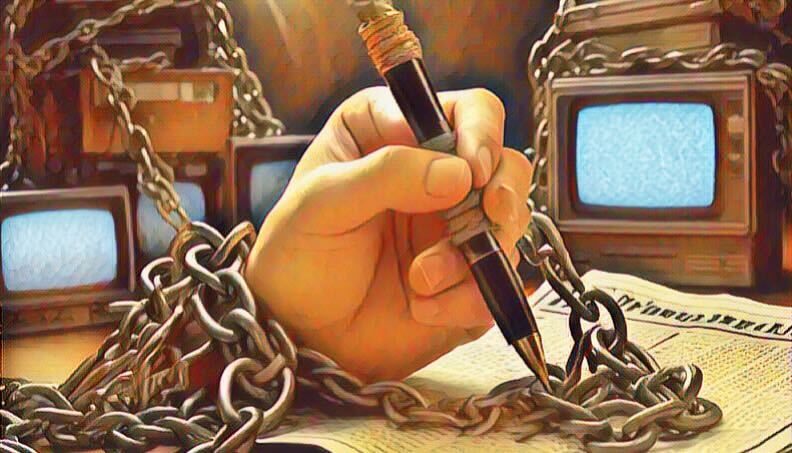
The repression of journalists who report on the truth in various parts of the world continues to deepen and spread like a cankerworm, feasting its way through fresh maize leaves. It has gotten so worst that even journalists who have fled to exile are no longer safe because the abuse of democracy allows for repression by their home governments to transpire across borders.
239 journalists have died in the ongoing massacre in Gaza. Fiston Wilondja was found dead on August 05 2024 in Bukavu allegedly murdered by M23.
39 journalists from Africa have been killed between 2020 to 2025 with 11 of them from Sudan. At least 7 journalists were killed in Sudan between July 2023 to November 2024 as reported by Sudan National Broadcasting Corporation (SNBC).
In 2024, 21 journalists were jailed across Africa with six from Egypt, four each in Nigeria and Tunisia. The case of Martinez Zogo, a Cameroonian journalist and human rights defender who was abducted, tortured and killed in 2023 has not been solved.
It is the duty of the state to protect journalists and citizens enjoying their right to freedom of expression but with this type of insecurity, a journalist will have to be twice as strong to cover sensitive and controversial topics, mostly if they are reporting where there are restrictions or where their report is opposing government.
As press freedom continues to decline worldwide, corrupt state officials remain the main perpetrators in the attacks, killings and incarceration of journalists.
As a young boy growing up, I witnessed my own father, the late Cameroonian veteran journalist Sam Nuvala Fonkem spend several months in the Kondegui maximum security prison for speaking the truth. Not only that, being attacked, beaten and thrown into the gutters by the gendarmes and police is something I witnessed regularly every time we walked around the city of Yaoundé, capital of Cameroon. I am still surprised how all of that played a pivotal role in my becoming a journalist in present day Africa when most governments remain oppressive towards the media.
As journalists who serve public interest, we belong to the public, we must remain fearless to report without fear or favour. It is for corrupt individuals to change their ways and not for us to change career.
 Critique Africa