
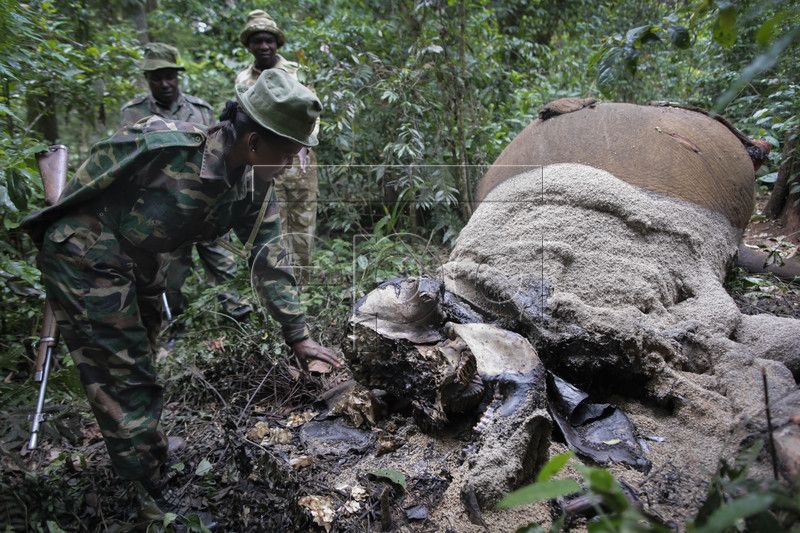
A delve into poaching in Kenya from 2007 to 2021.
Sema Fonkem 15/10/2022
Poaching is an environmental crime activity that has been a major threat to the Kenyan wildlife and it is practiced through the illegal hunting and killing of animals. Poaching can cause the extinction of so many animal species in the near future. Elephants are and Rhinos are two of the animals that are mostly affected by poaching. So many individuals and businesses use elephants tusk in the manufacturing of jewelries which are used as gifts and souvenirs. Rhino horns are mostly used to produce traditional medicine as people believe that a Rhino horn powder can cure many different diseases. This is mostly practiced by Chinese traditional medicine manufacturers. Others also hunt and kill some wild animals for use as meat (food consumption purposes) commonly called bushmeat. Animal skin such as snake skin is used for the production of jackets and belts. The aim of poaching is for money making. In 2013, poaching was ranked fourth place amongst the most lucrative illegal businesses as International Fund for Animal Welfare (IFAW) reported that poaching generated a revenue of at least 14 billion euros a year and this activity is financed by criminal syndicates. In 2013, Kenya Wildlife Service (KWS) reported in an epa publication that about 280 elephants and 60 Rhinos were killed.
The Kenyan government and KWS have taken some effective approach in providing solutions to help fight against poaching. One of the methods put in place to stop poaching and apprehend suspected poachers is the use of aerial patrol units. The ground patrol in high risk areas have also been improved by involving community members who also understand the negative impact of poaching to be on the alert for poachers. John Waweru KWS director-general made in an interview by Xinhua in 2019 said, “Our law enforcement units have embarked on structure engagement with local communities, private ranches, and other conservation stakeholders to counter poaching threats and other wildlife crimes.” After this implementation, only 34 elephants and four Rhinos were killed by poachers in 2018.
After reading the brief of this essay, I spoke to some of my classmates at Boston Media House to share their sentiments towards poaching. The first person I spoke to Kendrah Jacobs said, “Poachers should be given longer prison sentences without fines because sometimes money promotes the crime and if poaching is stopped our children can grow up to see the animal species that are being killed and face extinction.” Another friend, Samantha Keti said, “It is very important to put an end to poaching because it is a barbaric act.” In Keti’s opinion, a person who kills wild animals can also kill a human being and such a person is a danger to society. Solutions provided to stop poaching has really helped. On the 21st of June 2021 a twitter user known as The Peoples Watchman @bonifacemwangi a Kenyan journalist who has 1.8m followers on his account posted the following, “For the first time in 21 years, Kenya Wildlife Service reported ZERO poaching of Rhinos in the year 2020.”
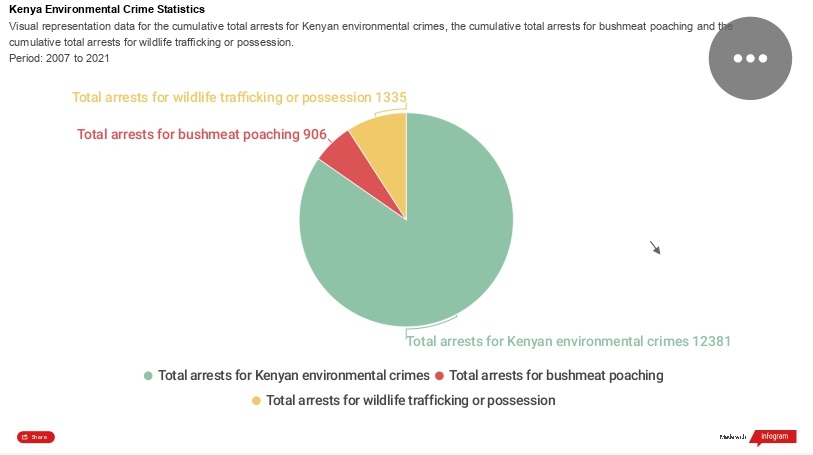
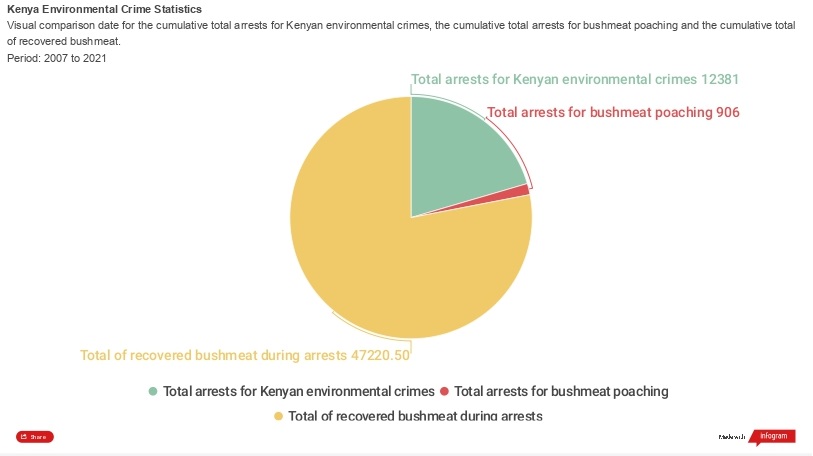
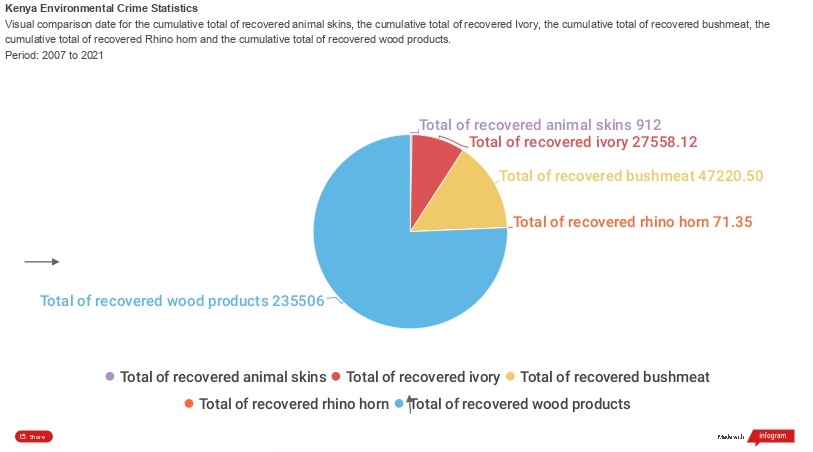
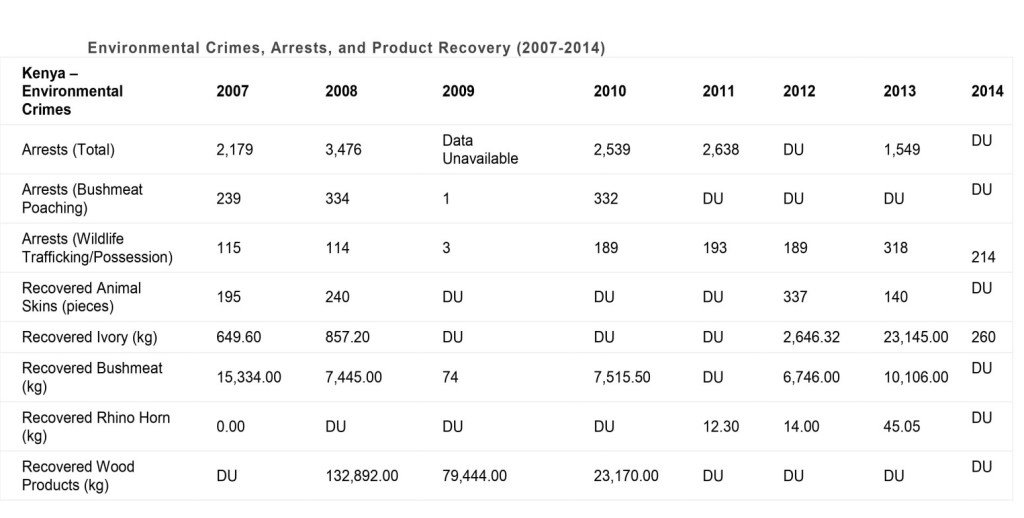
Data representation and data comparison slides titled Kenya Environmental Crime Statistics (2007 – 2021) are available on Infogram for further understanding. Screenshots have also been provided below.
Information sources:
Sources:
https://www.traffic.org/site/assets/files/9287/traffic_bulletin_march_1997_-_october_2019.pdf, https://www.poachingfacts.com/poaching-statistics/environmental-crimes-and-arrests-%20statistics/
The Kenyan Wildlife Service has not publish any environmental crime reports for the years of 2015, 2016, 2017, 2018, 2019, 2020 and 2021 Crimes on Kenya Environmental. Additional 2014 is from traffic.org which is also reliable source.
 Critique Africa